October 4, 2026 | SAPTARSHI SAMANTA | 6 min read
The most common objection to a client portal for Indian freelancers has nothing to do with features or price. It's five words, said with total conviction: my clients won't use it.
Said about clients who tracked a Swiggy order to the minute last night. Who checked into a flight from a link, followed a parcel across three states, watched a UPI dispute's status change in an app. The Indian client is arguably the most portal-fluent customer on earth. Nobody trained them to do any of it, nobody sent them a walkthrough, and not one of them has ever called a restaurant to ask where the food is when a map would tell them.
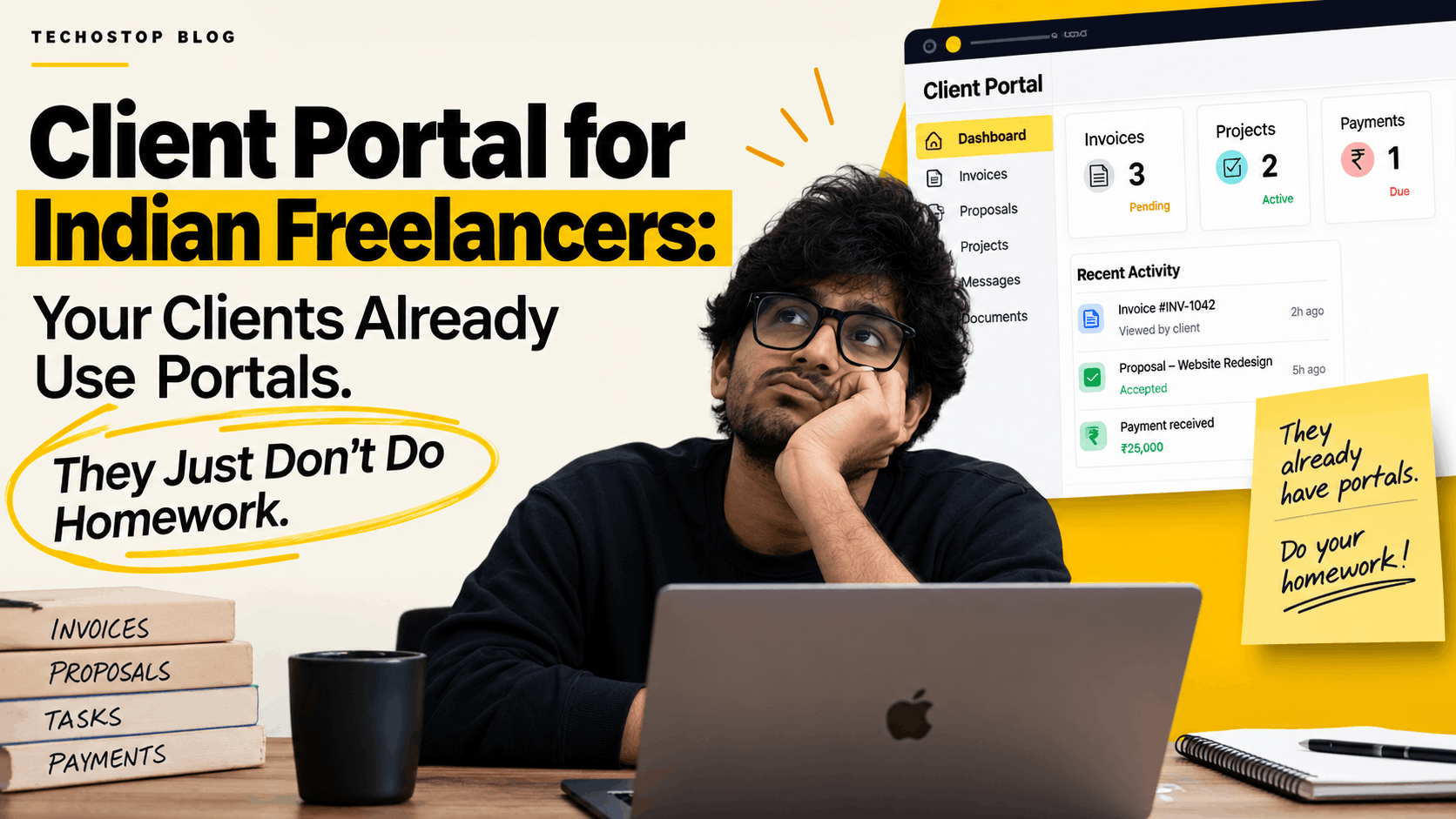
So the objection is real, but it's aimed at the wrong thing. Clients don't resist portals. They resist homework, and most freelancers introduce a portal as homework.
What homework looks like
Picture the failed launch, because it fails the same way everywhere.
The freelancer, excited about the new system, sends the setup email. Here's your login, here's how to create your password, here's a quick overview of the sections, let me know if you need a walkthrough. Three asks and a tutorial before the client has received a single thing of value. That email reads like an assignment from a tool they never asked for, so it gets the response assignments get: opened, deferred, forgotten.
Then the project's questions keep arriving on WhatsApp, and the freelancer keeps answering them there, fully, every time. Which settles the matter. Why would anyone visit a page whose entire contents get hand-delivered to them in chat within the hour? The portal died not because the client refused it but because it was never once the easiest way to get an answer, and easiest always wins.
The food-tracking map never had this problem, and it's worth being precise about why. It answered a burning question, where's my order, at the exact moment of hunger, at a link that required nothing. Value first, zero setup, no alternative channel offering the same answer faster.
Launching a client portal for Indian freelancers: stock the room first
The launch sequence that works copies that shape, and it starts before the invite.
Put everything in first. The signed brief, the timeline with its dates, the first files, the invoice and what's been paid, the tasks with their current status. A client's first visit decides whether there's ever a second one, and an empty room guarantees there isn't. They should arrive to find their project already living there, mid-breath, useful on sight.
Then send one link, not one login-plus-instructions, and frame it as service rather than system. This piece's script: "Everything for your project lives at this link, the plan, the files, where things stand, what's been paid. Bookmark it. Any time you wonder about anything, it's on that page before you've finished typing the message to me."
Notice what that framing does. It doesn't ask them to learn anything or promise to use anything. It hands them a faster route to a thing they already want, exactly the way the tracking map did.
You are the leak
Here's the part freelancers skip, and it decides everything: after the invite, route yourself through the room.
When the question arrives on WhatsApp anyway, and it will, answer it warmly and briefly, then anchor it: "yes, revised draft's up, it's on your page with the notes." Two weeks of that and checking the page becomes the client's reflex, not because they adopted software but because the page kept being where the full answer lived. Keep delivering complete answers in chat instead and you've personally taught them the portal is decorative, and no tool survives its owner undermining it.
This is the boundaries piece's chat-for-warmth principle wearing its adoption hat: the DM stays open, stays friendly, and points one click deeper. In this market the portal never replaces WhatsApp. It sits behind it, and the link travels inside the DM, which is precisely why it works here.
The client who never clicks
Some won't, and it matters less than you'd think.
A portal earns its keep one-sided. It's still your record of scope against the quick-change requests, still the timestamped approval trail, still the tally that shows what's been paid, all the evidentiary weight this series has hung on having one room, whether or not the client ever logs in. Client adoption is the bonus, not the precondition.
Two patterns worth knowing, though. The founder who ignores the portal often has an accounts person who adopts it instantly, because invoice visibility is their whole job, and that alone can shave weeks off payments. And the client who wouldn't click during month one starts clicking the week their boss asks for a status, because forwarding your page is easier than composing a summary. Let the room wait for them; rooms are patient.
Thirty days in
What actually changes, concretely, once the routing habit holds. The where-are-we messages thin out, because the answer outran the question, which is what the client-silence piece predicted from the other direction. Approvals stop living in scroll-back. Invoice questions answer themselves, and the awkward tally conversation from the deposits piece becomes a page both sides can see. None of it is dramatic. It's the absence of a dozen small frictions, which is what good systems feel like from inside: quieter.
Where Techostop fits this specific problem
Adoption is mostly about what you ask of the client, so judge tools by the size of that ask. Techostop keeps it near zero: the client room opens from a link like any webpage, no app to install, carries your branding rather than a vendor's, and holds the chat inside it so even their messages land where the record lives. From 299 rupees a month. And the honest note, consistent with everything above: introduced as homework, this tool dies exactly as fast as any other. The launch sequence is yours to run; the software just has to not add steps to it, and the free account is how you rehearse the whole thing on one friendly client first.
The ask was the problem
Run the whole argument backwards and it lands in one place. Your clients track food, flights, parcels and payments through portals every single day, joyfully, without training. The capability was never missing. What made your page different from Swiggy's map was never the client, it was the ask: theirs answered a question instantly at a link, yours arrived as a login, a lesson and a favour.
Change the ask. Stock the room, send the link, let every full answer live one click behind the warm chat. Nobody was ever trained to track a food order, and nobody needs training to check on their own project. They just need the page to be the fastest place the truth lives.